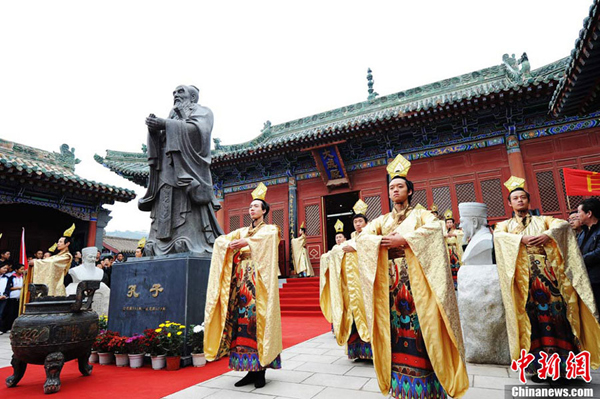
Spring and Autumn Annals
Introduction
The Spring and Autumn Annals (Chunqiu) is one of the earliest Chinese historical texts, traditionally attributed to Confucius. It is a detailed chronological record of events in the State of Lu, Confucius's native state, spanning from 722 to 481 BC. The work is considered one of the Five Classics of Chinese literature, serving as a key source for understanding the political and social milieu of early China.
Historical Context
The Spring and Autumn Annals emerge from a period of Chinese history known as the Spring and Autumn Period (770-476 BC), a time marked by significant political fragmentation and frequent military conflicts among various states. Despite the turmoil, this era was also characterized by cultural flowering and the development of enduring philosophical ideas. Confucius is said to have compiled and edited the Annals as an educational tool to convey moral lessons through the historical narrative.
Structure and Content
The Annals is a terse, annalistic record that uses a laconic style to document events year by year. It comprises observations on natural phenomena, state rituals, territorial changes, alliances, and conflicts among states. Although the text itself is brief and factual, it is supplemented by extensive commentaries, the most prominent of which is the Zuo Zhuan, which provides detailed narratives and interpretations of the events recorded in the Annals.
Commentaries
The Zuo Zhuan is traditionally attributed to Zuo Qiuming, a contemporary of Confucius. It is considered one of the greatest works of Chinese literature and offers profound insights into the political dynamics and ethical considerations of the period. Other notable commentaries include the Gongyang Zhuan and the Guliang Zhuan, each providing unique perspectives and interpretations of the events chronicled in the Annals.
Influence on Chinese Thought
The Spring and Autumn Annals has had a lasting impact on Chinese thought and historiography. Confucius's treatment of historical events in the Annals has been viewed as a subtle critique of the moral and political failings of his time. The text is foundational to Confucian philosophy, particularly its emphasis on moral rectitude, proper conduct, and the role of history as a moral guide.
Role in Confucian Canon
As one of the Five Classics, the Annals played a central role in the education and examination systems of imperial China. Scholars were expected to study the text to gain insights into governance and ethics, and its teachings influenced generations of Chinese leaders and thinkers.
Legacy
The historical significance of the Spring and Autumn Annals extends beyond its immediate context. It has been a source of inspiration for later works of history, literature, and philosophy in both China and neighboring cultures. The Annals' emphasis on the importance of history in shaping societal values continues to resonate, underscoring the enduring relevance of this ancient text in contemporary discussions of history and ethics.








